


The boom of AI large models has driven a sharp surge in computing power demand, making liquid cooling a standard configuration for data centres. Massive precision copper components underpin liquid‑cooling systems, including pipe joints, copper terminals, heat‑dissipation copper plates and high‑frequency connectors. The machining accuracy and surface quality of these copper parts directly determine the stable operation of liquid‑cooling systems.

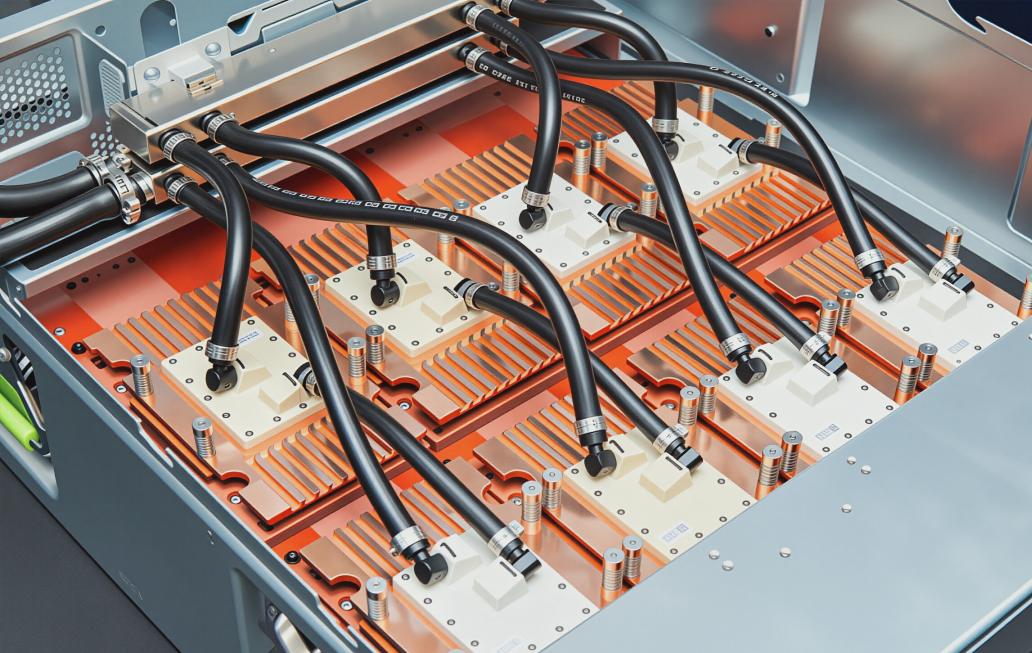
The difficulties in copper machining do not lie in cutting tools or machine‑tools, but in the intrinsic material properties of copper. Copper is susceptible to oxidation and discoloration, and tends to react with cutting fluid to produce copper soap. When these issues occur, they may reduce the appearance qualification rate in mild cases. In severe cases, tool jamming and filter clogging will happen, dimensional accuracy will be compromised, and maintenance costs will rise dramatically.
Most factories that have tested multiple cutting fluids for copper machining share the same pain point: lubrication performance is achieved at the cost of insufficient anti‑oxidation capacity; when service life is extended, copper soap precipitation emerges.
Four Common Challenges in Copper Machining
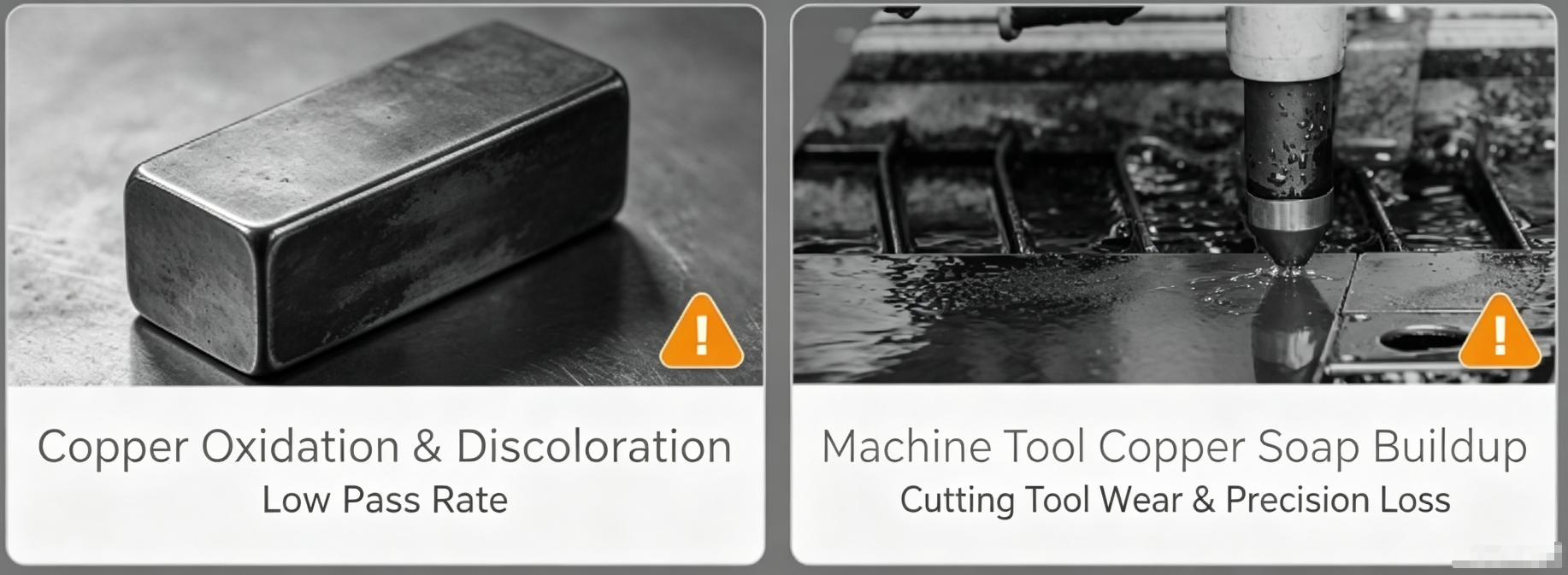
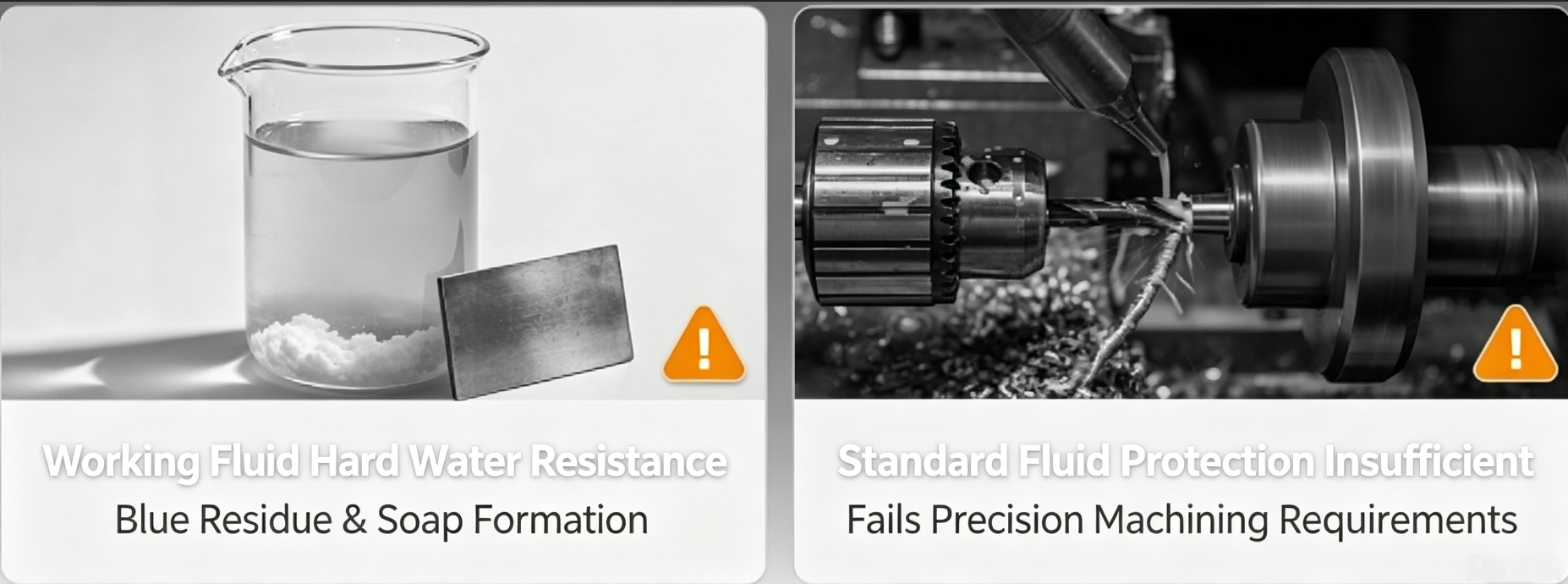
The root cause of all four challenges is clear: conventional cutting fluids are not formulated for copper materials.
Amer SF353 Copper‑Specific Cutting & Cooling Fluid
Specially developed to solve core difficulties in precision copper machining, Amer SF353 addresses the unique requirements of copper processing one by one.
1. Long‑term copper protection to prevent oxidation and discoloration from the source
Formulated with long‑acting copper‑protective additives, Amer SF353 forms a dense protective film on copper workpiece surfaces to block oxidation reactions, keeping copper parts bright throughout the whole machining process.
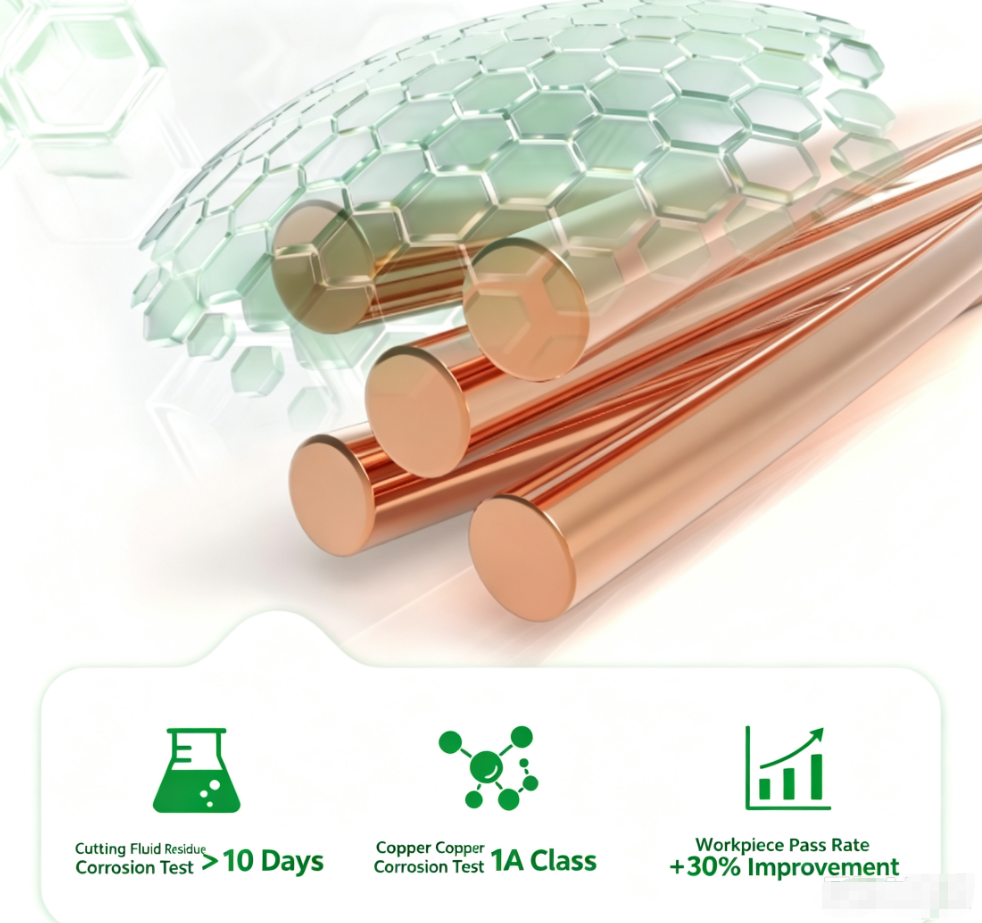
2. No verdigris or copper‑soap precipitation for cleaner machine‑tools
Copper‑ion stability in cutting fluid determines copper‑soap precipitation risk. With proprietary copper‑ion and hard‑water stabilised formula, Amer SF353 avoids tool jamming, filter clogging and machine‑tool fouling, greatly reducing equipment‑cleaning frequency.
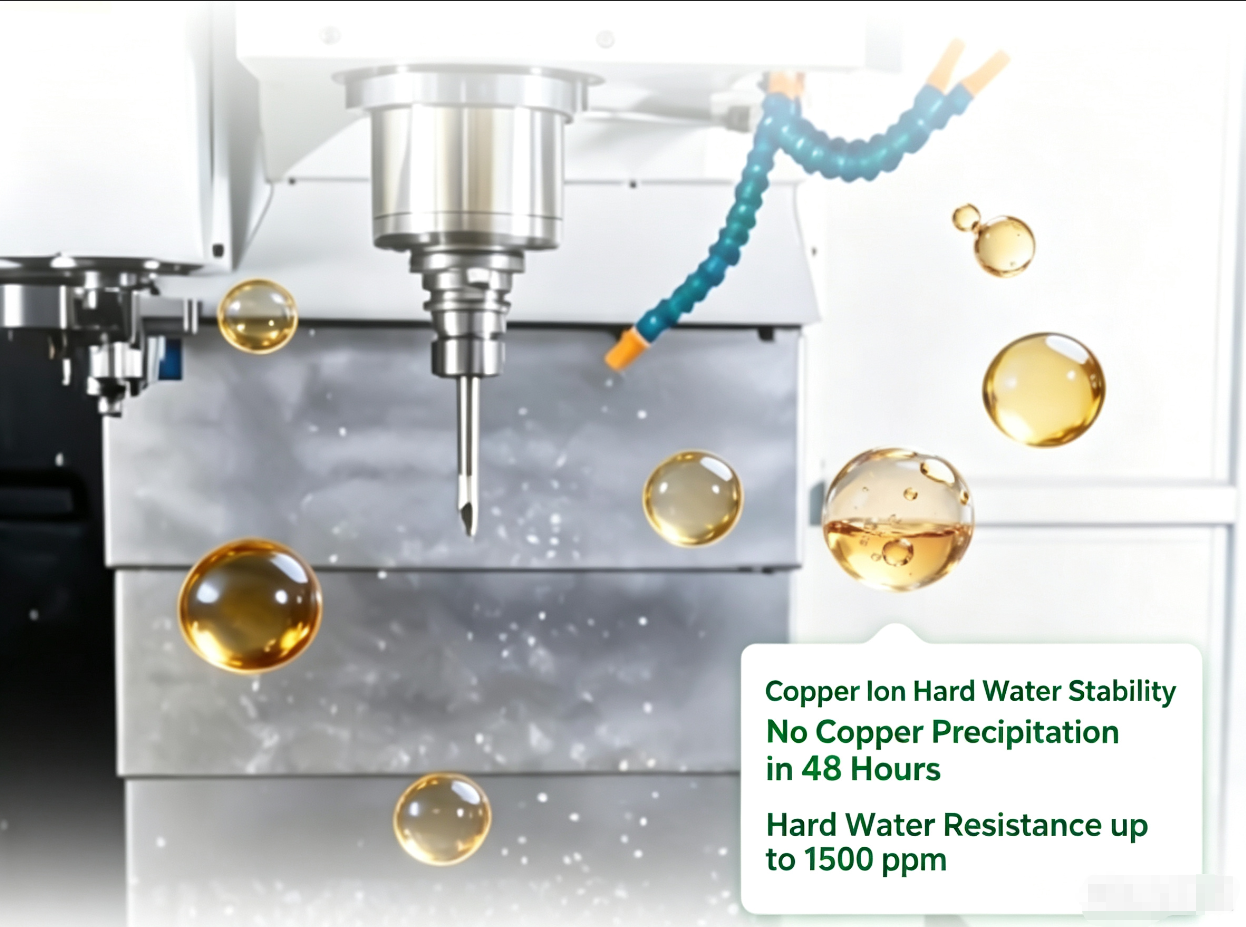
3. No blue discoloration after long‑term use; clear and transparent working fluid
Blue discoloration of cutting fluid originates from reactions between copper ions and fluid under hard‑water conditions. Amer SF353 features excellent hard‑water resistance. In a 55 °C high‑temperature test with copper powder added, the working fluid stays clear without turning blue for one full month. No soap precipitation, no phase separation and no performance degradation. Extra water pre‑treatment is not required.
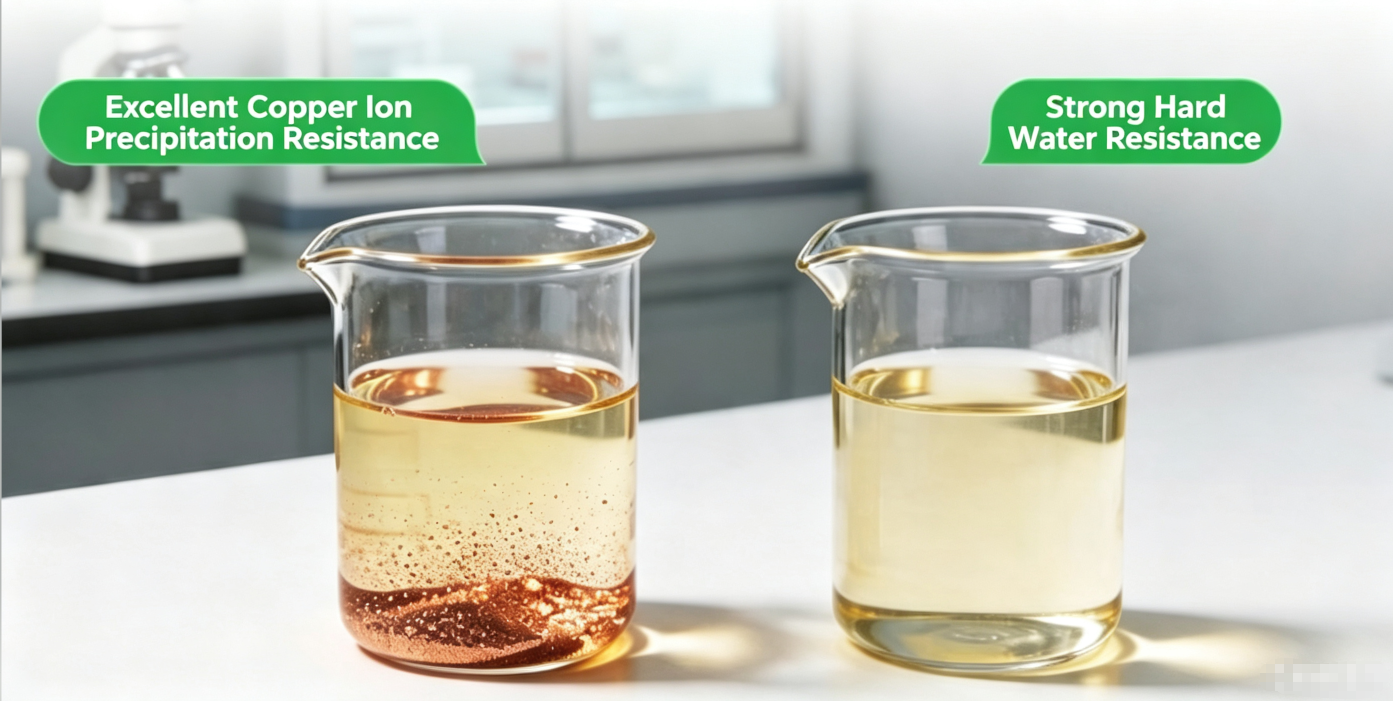
4. Tailored for diversified precision copper‑machining scenarios
Compatible with mainstream equipment and processes. It works well on CNC machining centres from Citizen, Mazak, FANUC and other well‑known brands. It delivers reliable cooling‑lubrication performance for high‑frequency connectors, heat‑dissipation copper sheets, NEV motor rotors, high‑voltage wiring harnesses and other precision copper‑component applications.
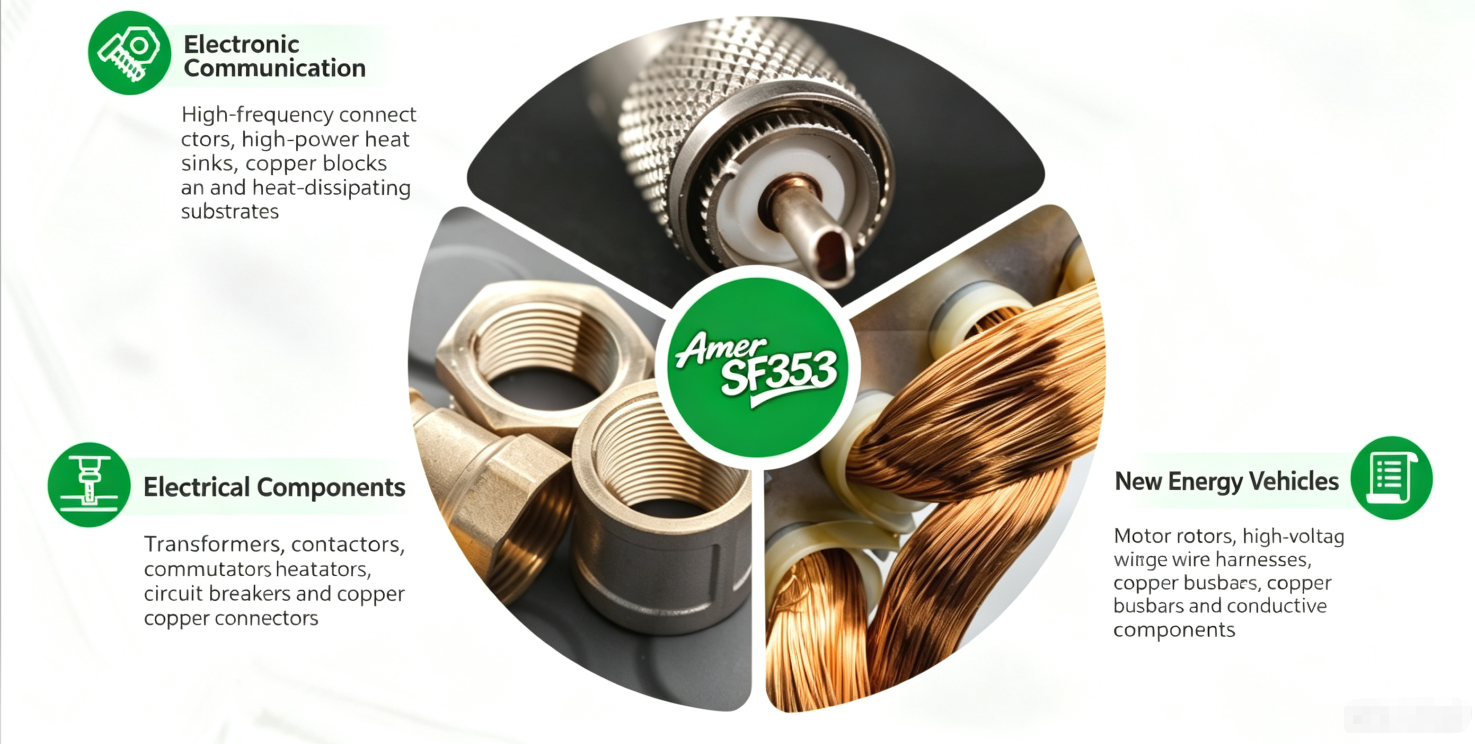
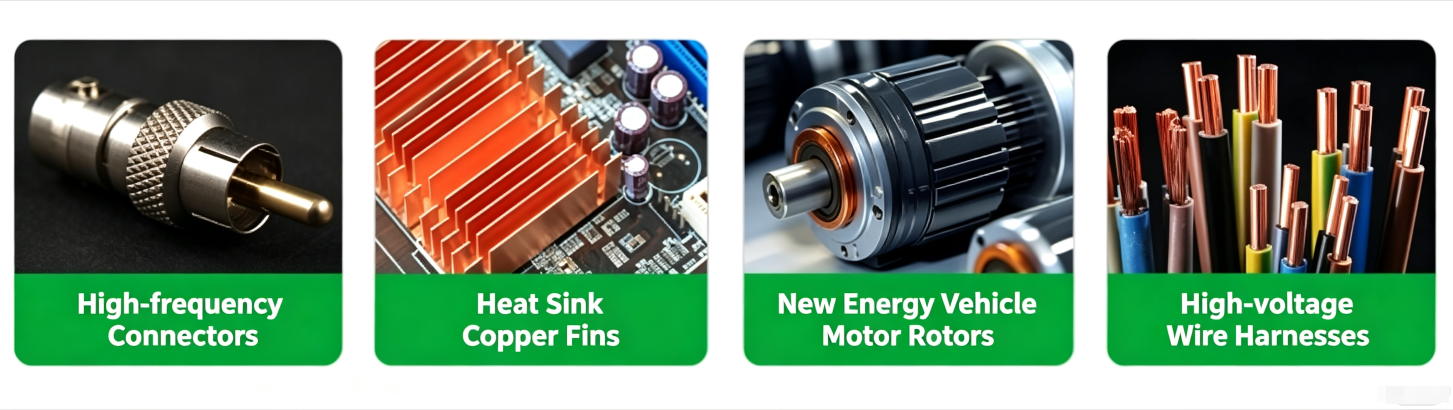
5. Proven performance verified by real‑world field tests
Superior performance is proven through practical deployment. Amer SF353 has been validated at multiple leading precision‑copper‑component manufacturers across electronics & communications, new‑energy‑vehicle copper parts, high‑purity oxygen‑free copper electrodes and other market segments:
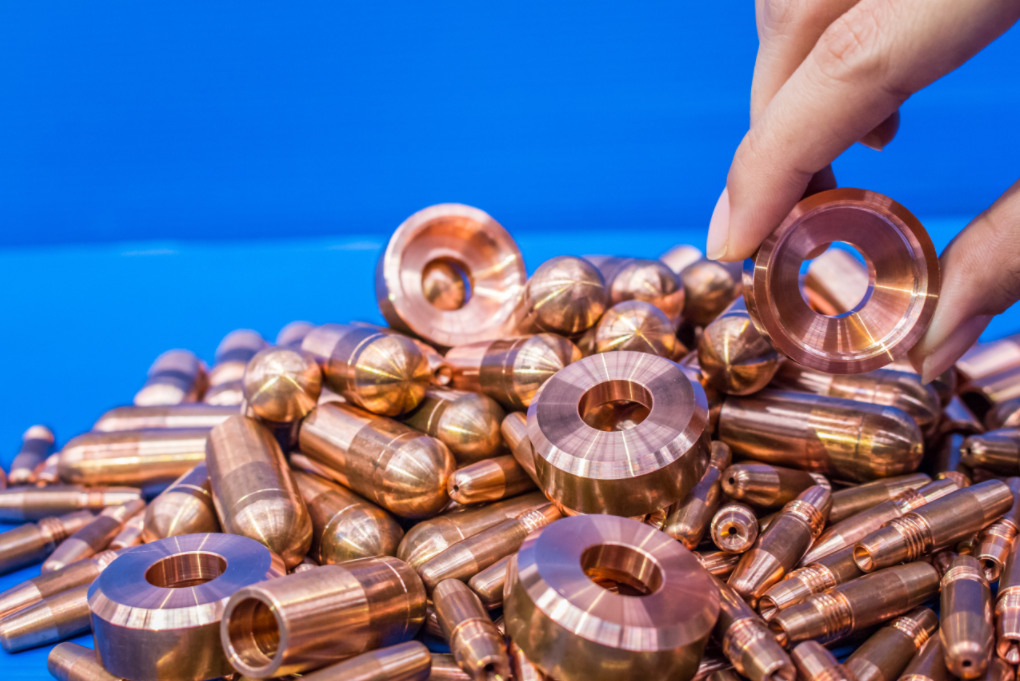
A leading precision copper‑processing enterprise
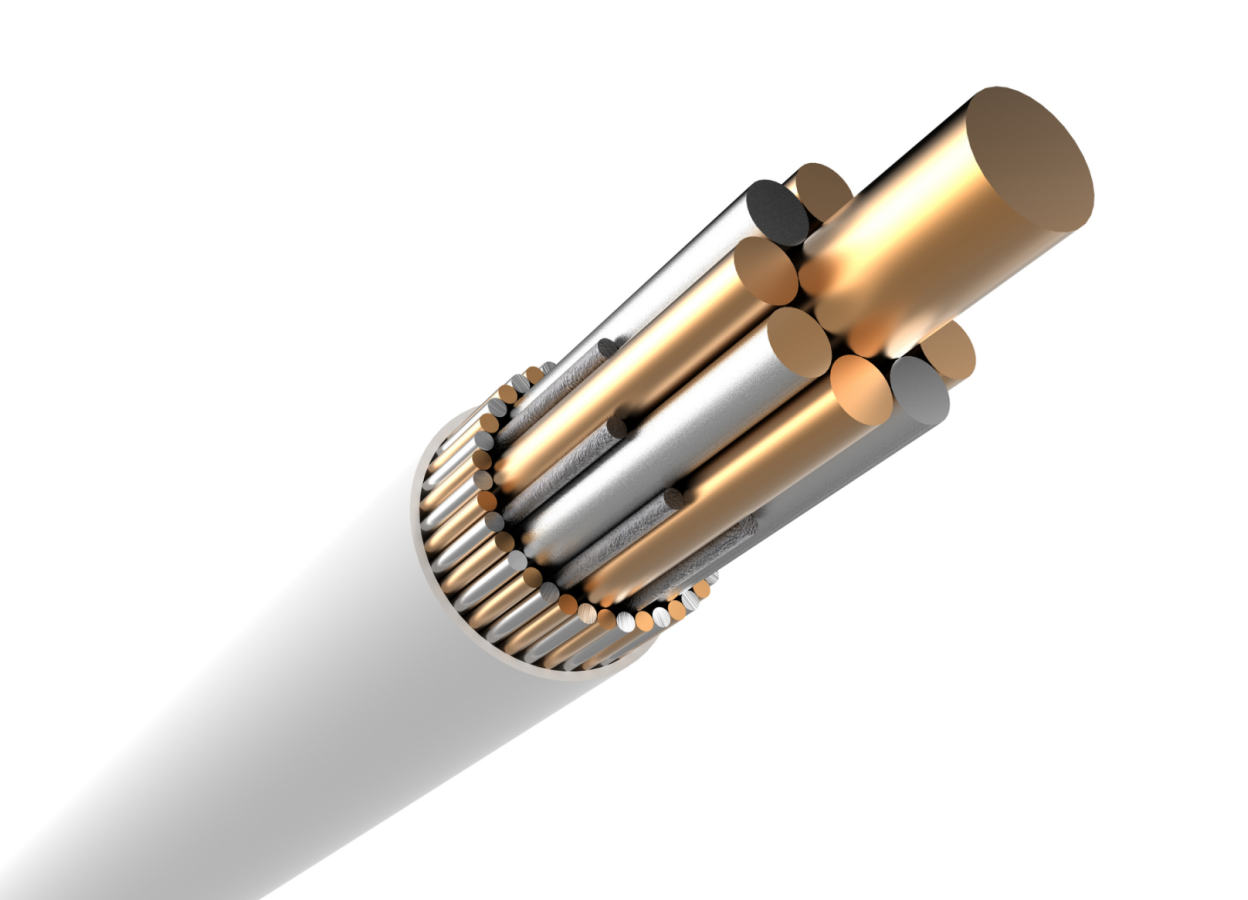
A manufacturer of electronic & electrical copper components
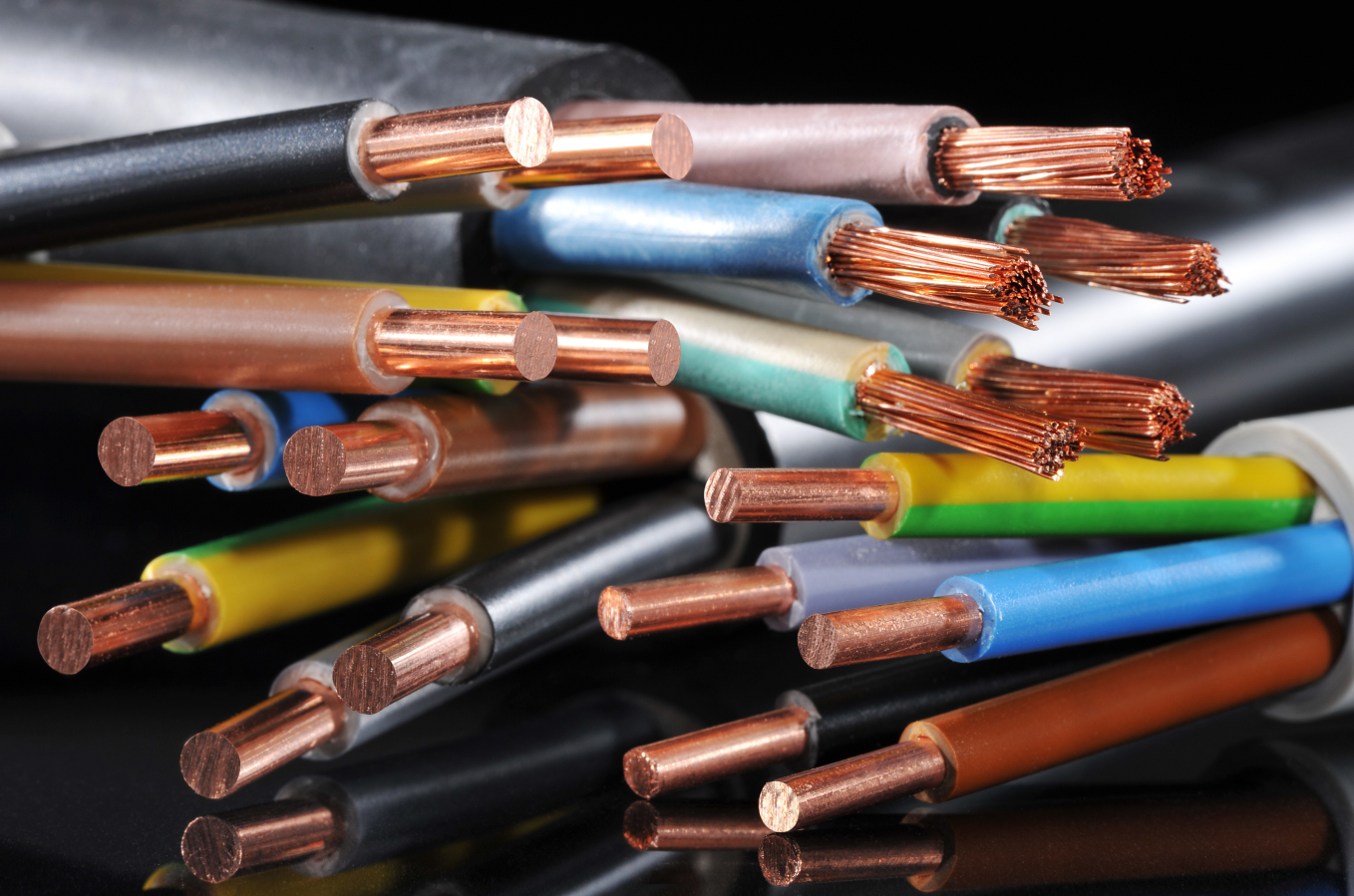
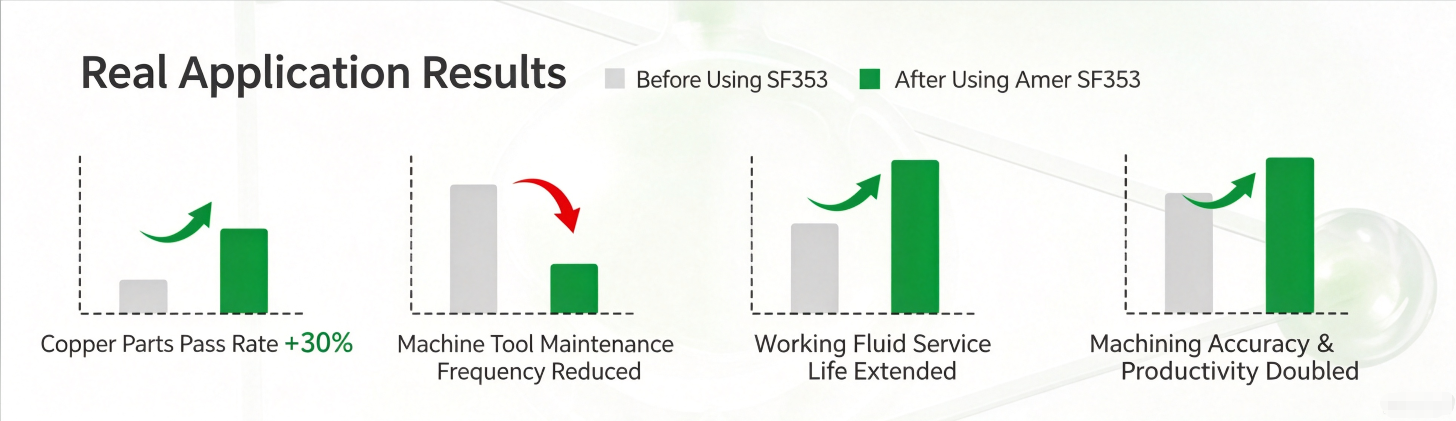
Copper‑machining difficulties cannot be fully solved simply by switching to another cutting fluid. Amer SF353 copper‑specific cutting & cooling fluid understands copper‑processing mechanisms at the formula level: protecting copper surfaces, stabilising fluid performance and matching actual manufacturing processes, to deliver reliable assurance for every machining procedure.